
Digital transformation has become a strategic imperative for companies seeking to remain competitive and innovative. These strategies not only enhance operational efficiency but also create new opportunities for growth and customer engagement.
What is Digital Business Transformation?
Digital transformation refers to the integration of digital technologies across all areas of a business, fundamentally changing how it operates and delivers value to customers.
Digital business transformation is no longer a choice for modern enterprises but a strategic imperative. In an increasingly digital world, companies must evolve their operations, customer engagement, and business models to remain competitive and relevant.
Top five digital transformation strategies
Below, we outline the top five digital transformation strategies that are driving success in today’s enterprises.
Customer-Centricity through Data-Driven Insights
At the heart of successful digital transformation is a deep understanding of the customer. By leveraging advanced data analytics, businesses can gain real-time insights into customer behavior, preferences, and pain points. Companies like Amazon and Netflix are prime examples of how harnessing big data enables personalized experiences, leading to increased customer loyalty and retention. For companies embarking on a digital transformation, investing in robust data analytics platforms is critical for aligning products and services with customer needs.
Cloud Adoption for Agility and Scalability
Cloud technology plays a pivotal role in enabling businesses to scale quickly and operate with greater agility. Migrating to the cloud allows companies to reduce IT costs, increase data accessibility, and respond to market changes more rapidly. Microsoft’s transformation into a cloud-first company, with the success of Azure, showcases how cloud adoption can support innovation and operational flexibility. For businesses, cloud solutions empower them to build scalable infrastructures without the constraints of traditional IT systems.
Automation and Artificial Intelligence for Operational Efficiency
Automation and AI are reshaping the way businesses operate by streamlining repetitive tasks, improving accuracy, and reducing operational costs. From robotic process automation (RPA) in finance and HR to AI-driven customer support chatbots, these technologies free up human resources for higher-value tasks. Companies like IBM and Siemens have used AI to optimize operations and create smarter workflows, enhancing productivity. Implementing AI and automation technologies is an essential strategy for businesses seeking to achieve efficiency gains in a digital world.
Embracing Digital Ecosystems and Collaboration
In an interconnected digital economy, businesses can no longer operate in isolation. Forming strategic partnerships and joining digital ecosystems allows companies to leverage each other’s strengths and co-create value. Platforms like Apple’s App Store or Salesforce’s ecosystem illustrate how businesses can thrive by fostering collaboration. By integrating with external partners, businesses can tap into new markets and enhance their innovation capabilities.
Cybersecurity as a Core Component of Digital Strategy
With increased digitalization comes heightened cybersecurity risks. As businesses adopt new technologies and digitize their operations, protecting sensitive data and ensuring privacy becomes paramount. Cyberattacks can not only lead to financial loss but also damage a company’s reputation. Companies like IBM and Cisco have embedded cybersecurity into their digital strategies, offering a robust defense against evolving threats. For any business embarking on digital transformation, investing in cybersecurity infrastructure is critical to maintaining trust and safeguarding operations.
Conclusion
These five strategies—customer-centricity, cloud adoption, automation, ecosystem collaboration, and cybersecurity—are fundamental to achieving successful digital transformation.
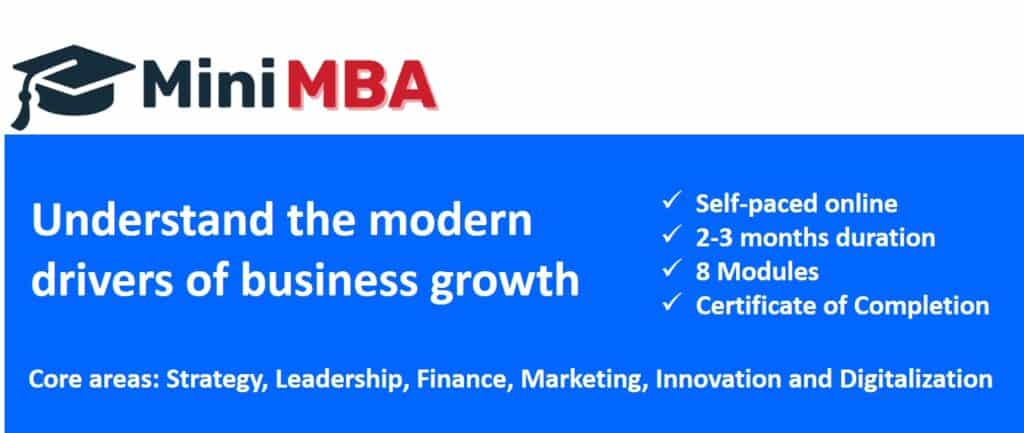
For Mini MBA students, understanding these approaches is key to driving innovation and creating a resilient business in the digital age.
Explore our Mini MBA program content.