Mini Master of Business Administration

Program curriculum

Six essential business disciplines. One executive perspective.

The Mini MBA follows an integrated learning journey, from competitive strategy and customer value to leadership, financial decision-making, innovation and AI transformation. Each module combines essential management frameworks with company cases and worked executive analyses.

Black chess king in the foreground on a chessboard

Module 1: Strategic Management and Competitive Positioning

Understand how businesses compete, create value and build competitive advantage.

Learn how executives analyze competitive environments, assess organizational capabilities and evaluate strategic choices.

What you will learn to do

  • Analyze industry structure and competitive forces.
  • Identify sources of competitive advantage.
  • Evaluate business models and value creation strategies.
  • Apply SWOT, PESTEL and other strategic analysis frameworks.
  • Understand strategic trade-offs and resource allocation.
  • Assess strategic alternatives and implementation priorities.

Wooden blocks with icons for marketing goals, communication and metrics

Module 2: Marketing Strategy and Customer Value Creation

Understand customers. Create value. Drive profitable growth.

Learn how businesses identify customer needs, develop value propositions and connect marketing decisions with commercial performance.

What you will learn to do

  • Apply customer segmentation, targeting and positioning.
  • Understand customer needs and Jobs to Be Done.
  • Develop differentiated value propositions.
  • Analyze customer journeys and digital marketing funnels.
  • Interpret acquisition cost, lifetime value and retention metrics.
  • Evaluate marketing performance and growth opportunities.
Wooden figures grouped around a red figure representing a team leader

Module 3: Leadership, Collaboration & Executive Presence

Lead with confidence. Communicate with impact. Influence business outcomes.

Explore the leadership capabilities required to manage teams, communicate, align stakeholders and guide organizations through change.

What you will learn to do

  • Understand leadership styles and their applications.
  • Apply emotional intelligence to management situations.
  • Structure executive communication and recommendations.
  • Analyze stakeholder interests and influence.
  • Understand negotiation and conflict management.
  • Evaluate organizational change and team effectiveness.
Professional reviewing financial reports beside a laptop

Module 4: Finance & Business Acumen

Understand the numbers behind better business decisions.

Develop the financial knowledge needed to interpret performance, assess investments and understand management decisions.

What you will learn to do

  • Interpret income statements, balance sheets and cash flow statements.
  • Analyze profitability, margins and financial performance.
  • Understand working capital and cash flow management.
  • Apply break-even analysis and unit economics.
  • Evaluate investments using NPV, IRR and payback.
  • Understand budgeting, business cases and capital allocation.
Team developing product ideas and diagrams at a whiteboard

Module 5: Innovation, Product Thinking & Problem-Solving

Turn business problems into opportunities for innovation and growth.

Learn how organizations identify valuable problems, understand customer needs, test ideas and develop viable solutions.

What you will learn to do

  • Apply structured problem-solving and root-cause analysis.
  • Use issue trees and hypothesis-driven thinking.
  • Understand customer discovery and problem validation.
  • Apply Lean Startup and MVP principles.
  • Evaluate product-market fit and business model innovation.
  • Understand innovation prioritization and portfolio decisions.
Hand holding a card with gears between office buildings

Module 6: AI Strategy and Digital Transformation

Turn AI opportunities into measurable business value.

Learn how executives evaluate AI from a business perspective, prioritize investments and manage organizational transformation.

What you will learn to do

  • Understand AI capabilities and their business applications.
  • Evaluate data readiness and organizational AI maturity.
  • Identify and prioritize high-value AI use cases.
  • Understand generative AI, AI agents and intelligent workflows.
  • Evaluate AI investments and potential business returns.
  • Explore responsible AI, governance and transformation execution.

Learn Business Through 20+ Real-World Company Cases

The Mini MBA for the AI Era brings together 20+ company cases, explored through comprehensive written analyses and guided video explanations.

Discover how well-known companies address competitive pressures, customer needs, leadership challenges, financial decisions, innovation, and digital transformation.

Three Levels of Business Analysis:

Short company cases

Explore a business concept through a focused company example.

Example: How does Apple’s ecosystem support its competitive positioning?

More examples: IKEA, Microsoft, Netflix

Extended executive cases

Go deeper into a business challenge through analysis and management recommendations.

Example: How could Disney balance its strategic priorities across different businesses?

More examples: Spotify, McDonald’s, LEGO

Integrated business challenges

Follow Nike and L’Oréal across all six modules, examining each challenge from different business perspectives.

Example: How could Nike strengthen consumer relevance and profitable growth?

Disciplines: Strategy, marketing, leadership, finance, innovation and AI

Explore free case studies

Explore business topics

Continue with practical guides connected to the curriculum.

Need more info?

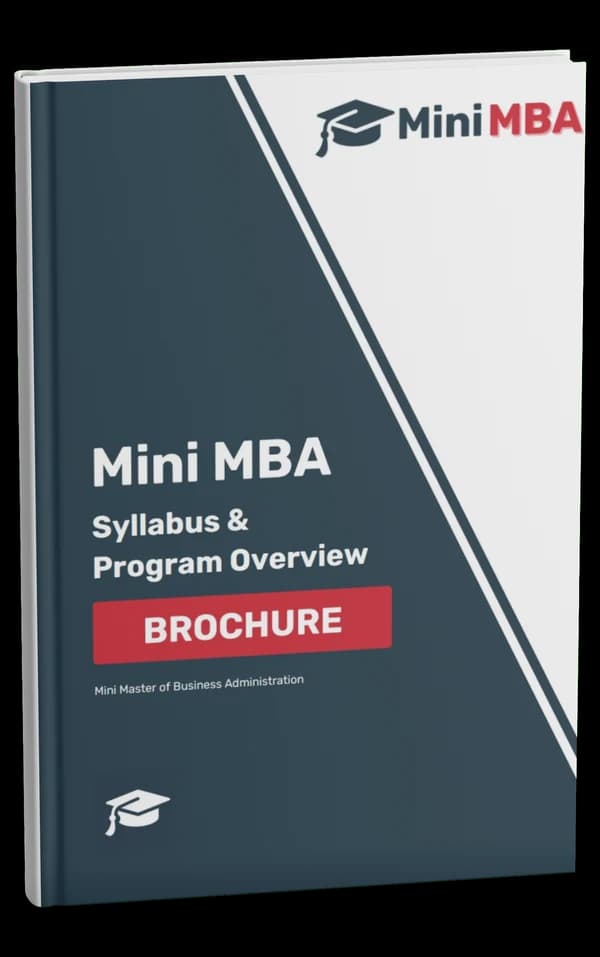
Explore the program brochure

Mini MBA Online brochure cover with the syllabus and program overview